 Kasra Vaziri
Product Taste: Obsessing Over Details No One Notices
A CPO's field notes on product taste: why obsessing over the invisible details no one will notice is a discipline, not vanity, and how small craft compounds.
There's a kind of polish a person feels before they can name it. The page loads and something in their shoulders relaxes. The empty state says the right thing at the right moment. The button presses back. They couldn't tell you why they trust the product — they just do. That gap, between what a user feels and what they can articulate, is where product taste lives. And caring about the parts of it nobody will ever consciously notice is the most underrated discipline in our craft.
I've spent a lot of nights arguing with myself about whether it's worth it. You move a label two pixels. You rewrite an error message for the fourth time. You fight for the loading animation that costs three days and ships to a screen most people see for 800 milliseconds. Somewhere a reasonable voice — usually mine — asks whether this is the best use of anyone's time. These are my field notes on why I keep deciding it is.
Taste is not personal preference
The easy dismissal is that taste is subjective, so chasing it is vanity. Paul Graham takes that apart in his essay Taste for Makers: "Saying that taste is just personal preference is a good way to prevent disputes. The trouble is, it's not true." He argues that good design has properties you can actually point at — it's simple, it's often strange, it solves the right problem — and that taste is the trained ability to recognize those properties and to want them badly enough to do the work. His line that's stayed with me for years: "The recipe for great work is: very exacting taste, plus the ability to gratify it."
That reframing matters because it turns taste from a personality trait into a practice. You don't have good taste or bad taste the way you have brown eyes. You develop it by looking hard at a thousand things, forming opinions, being wrong, and adjusting. Product taste is the same muscle pointed at software: at copy, at spacing, at the choreography of a flow, at what happens when things go wrong.
The discipline of the invisible 1%
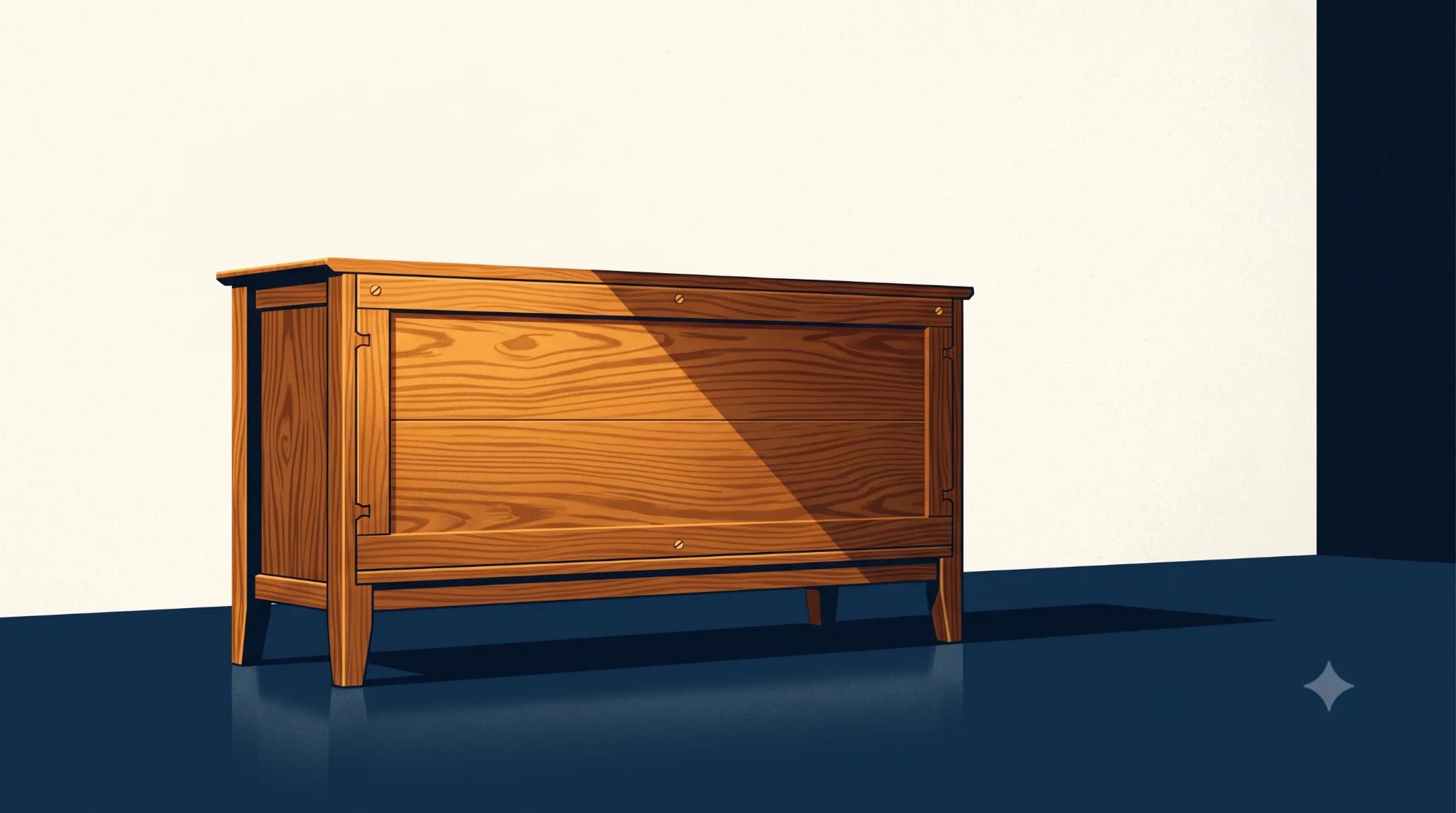
The story I come back to is Steve Jobs and his father building a fence. In Walter Isaacson's biography, Jobs describes a man who "loved doing things right" and who "even cared about the look of the parts you couldn't see." The lesson Jobs took into Apple was that the back of the cabinet, the inside of the case, the seam no customer will ever pry open — all of it gets the same care, because you know it's there.
Jony Ive said the same thing from the other side of the workbench. Asked what mattered most in design, his answer wasn't process or vision. "The most important thing is that you actually care, that you do something to the best of your ability," he said — and he described the work as "like finishing the back of a drawer. Nobody's going to see it, but you do it anyway."
Here's the part people miss when they call this perfectionism: it isn't about the back of the drawer. It's about what caring about the back of the drawer does to the front. A team that has decided no detail is beneath them ships a different kind of product, because the standard is set everywhere at once. You can't fake the invisible 1% and have the visible 99% come out right. The discipline leaks, in the good direction.
Why small craft compounds
A single rounded corner doesn't matter. That's the honest objection, and it's correct. The mistake is reasoning about details one at a time.
Polish compounds because trust is cumulative. Every interaction either adds to or subtracts from a user's confidence that this thing was built by people who know what they're doing. One sloppy empty state is survivable. But sloppiness has a tell — it clusters. The product with the misaligned modal usually also has the confusing error and the form that loses your work, because they all come from the same place: nobody whose job it was to feel the thing actually sat with it. By the time a user can articulate "this feels cheap," they've already absorbed forty small signals they never consciously logged.
The inverse compounds too, and faster than you'd expect. Get the micro-interactions right, write error messages that sound like a calm human, make the defaults smart, and users start extending you credit. They assume the parts they haven't tested yet are also good. Craft buys you the benefit of the doubt, and the benefit of the doubt is the most expensive thing to earn and the cheapest thing to spend.
How I keep taste from becoming an excuse
I want to be fair to the reasonable voice, because product taste curdles into self-indulgence fast if you let it. The discipline is knowing which details. Polishing the wrong thing perfectly is just procrastination with better production values, and I've shipped late more than once defending a detail no strategy needed.
A few tests I actually use:
Does it touch a moment of judgment? First runs, empty states, errors, the instant after a user commits — these are when people decide how they feel. Spend there.
Will it be felt, even if it's never named? Felt-but-unnamed is the sweet spot. Decorative-and-unnoticed is the trap.
Is the standard contagious? Some details matter less for themselves than for the bar they set. Hold the line where holding it changes the team's defaults.
Would shipping it embarrass the person who has to maintain it? If yes, that's the back of the fence talking. Listen.
Taste isn't a license to gold-plate everything. It's a sense for where the leverage hides — and the leverage hides disproportionately in the moments users can't quite put into words.
The takeaway
Product taste is the discipline of caring about details no one will explicitly notice, because the sum of them is the only thing anyone notices. The back of the fence is never really invisible — it shows up in how the whole thing holds together, and in who you become while building it. Pick the details that touch real moments, refuse to fake the parts that don't show, and let the standard leak everywhere. Users won't be able to name what you did. That's exactly the point. They'll just feel it, come back, and quietly trust you with the next thing.
Sources
Paul Graham, "Taste for Makers" — paulgraham.com/taste.html
Steve Jobs on his father's craft (from Walter Isaacson's biography) — thenextweb.com
Jony Ive on care and finishing the back of the drawer — appleinsider.com